

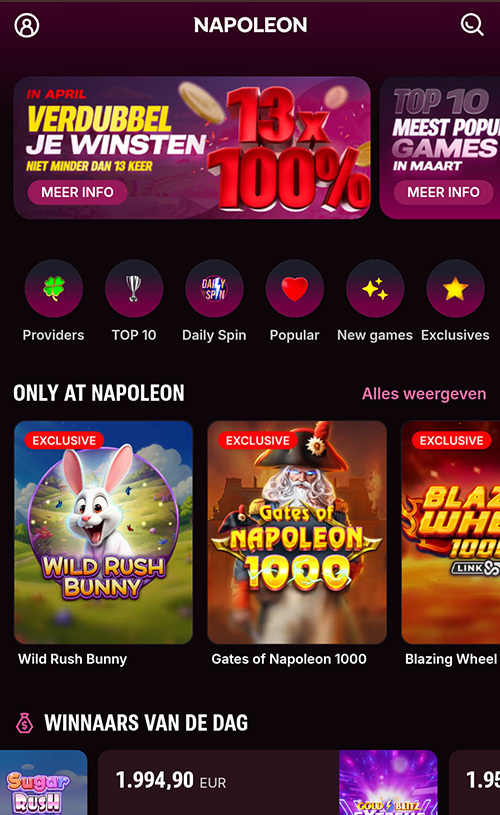
Setting a gambling budget is the best way to maintain play entertaining and controlled. In Belgium, sites like Napoleon Casino emphasize responsible play. A limit turns a casual session into a systematic activity where the financial limit is set before any wager, avoiding emotional decisions at the time.
What a Gambling Budget Actually Means
A gambling budget is a predetermined sum reserved strictly for wagering, totally separate from rent, bills, groceries, and savings. The gambler must view it as an entertainment cost—like a concert ticket—and acknowledge that the money may be lost entirely. This mental shift prevents chasing losses and reframes gambling as a leisure purchase with a defined price.
Spotting When a Budget Breaks Down
A budget fails silently when limits are consistently broken and excused. Borrowing money to gamble, lying about losses, or mentally planning deposits during work hours are red flags. Napoleon Casino directs users to third-party resources like VAD or Le Pélican, which deliver free, anonymous guidance that goes beyond platform tools.
Practical Steps to Establish the First Budget
Commence by calculating net monthly income, subtracting all fixed expenses and savings, then earmarking a small percentage for entertainment. Gambling should be just a fraction of that fund. Financial advisors advise entertainment not go beyond 5–10 percent of take-home pay.
- Calculate net monthly income after taxes and remove all essential bills.
- Shift a fixed savings amount to a separate account immediately.
- Designate a specific entertainment pool and set aside a fraction to gambling.
- Place only that amount into a dedicated gambling wallet at the beginning of the month.
- Define session loss limits inside Napoleon Casino based on weekly allowance.
- Plan non-negotiable break days with no gambling activity.
Carrying out these steps on payday ensures gambling money is what stays after everything else. The dedicated wallet forms a transparent vessel; when the balance reaches zero, the activity ceases naturally, just like a used cinema ticket.
The Reality Check and Cooling-Off Mechanics
Belgian platforms include reality checks—mandatory pop-ups that freeze the screen and show session duration and net result. This disrupts autopilot play. A cooling-off period, from 24 hours to several weeks, functions as a soft brake. If a weekly limit is breached, activating a cooling-off through Napoleon Casino protection des joueurs suspends access and halts same-day chasing.
Building a Weekly and Monthly Framework
A daily budget only works inside a broader structure. Dividing a monthly fund into weekly segments stops one bad evening from draining everything. For a 200-euro monthly budget, 50-euro weekly blocks preserve consistency. Tracking tools turn abstract limits into visible data, and honest accounting eradicates the self-deception that fuels unhealthy cycles.

Self-Exclusion as the Best Budget Guardrail
When voluntary controls prove insufficient, self-exclusion offers a legal firewall. Governed by the Belgian Gaming Commission, it blocks access to all licensed venues. A request through Napoleon Casino feeds to the national EPIS system, enforcing the ban across operators. The confidential process cannot be overturned early and shows that total abstinence is the only healthy path.
Setting Loss Limits and Win Limits
A loss limit is the highest a player will lose in a session; a win limit guarantees profit. A Belgian player might set a 50% gain as the cash-out trigger. Napoleon Casino offers reality-check notifications when a preset net position is reached. Defining both a floor and a ceiling erases ambiguity and counters the house edge.
Duration as a Budgeting Factor
Financial caps function best with time limits. An open-ended session normalizes the digital balance and fatigue distorts risk perception. Configuring an alarm before loading a game at Napoleon Casino signals containment. When the alarm sounds, the session ends regardless of the outcome, forming a dual safety net that protects against gradual erosion.
Separating Funds Ahead of the First Wager
Keeping gambling money in a dedicated e-wallet or a no-overdraft sub-account forms a hard barrier. Belgian banks often provide such sub-accounts. The physical distance from daily funds requires a deliberate transfer, introducing friction that lets logical thinking override the impulse to deposit more during a heated session.
Comprehending the Role of the Belgian Monitoring System
Belgium’s Gaming Commission ensures operator compliance and centralized exclusion lists. The EPIS system blocks self-excluded players from switching sites. Napoleon Casino operates under this legal obligation, with logged and auditable transaction histories. Personal budgeting discipline and national regulation together create a robust dual-control environment.
Deposit Limit Tools and Their Setup
Napoleon Casino features daily, weekly, and monthly deposit limits in account settings. A decrease takes effect immediately, while an increase triggers a cooling-off delay to block impulsive adjustments during a losing streak. Players should link the deposit cap to their pre-calculated weekly allocation, not the absolute worst-case loss they can afford.
Shifting the Mindset from Betting to Paying for Entertainment
Considering a 50-euro session as an expense for fun, design, and drama—not a return—takes away the emotional hurt of a loss. Napoleon Casino shows return-to-player percentages, so allocating the session budget by the average cost per spin estimates playtime. This data-driven view aligns with calm, objective budgeting.
Engaging a Confidant in the Approach
Declaring a weekly maximum to a partner or friend generates social pressure to follow it. The trusted person can examine bank statements, making hidden overspending harder. Belgian prevention services highlight that secrecy predicts harmful behavior. Combining software tools with human accountability forms the strongest defense against budget erosion.